 SHADY TATTOO
Types of ear piercing – which one to start with
By the SHADY TATTOO team · 22 October 2026
In short: there are lots of places to pierce an ear, but the key split is between the lobe (soft tissue) and cartilage (helix, tragus, conch, rook, daith and others). A lobe usually heals in a matter of weeks; cartilage takes months or longer and needs more care. Most people start with the lobe. At SHADY TATTOO in Wieluń, ear piercing is done by Martyna using the STUDEX System75 – ask at your consultation which spot makes sense for you.
Lobe or cartilage – the basic difference
The earlobe is soft tissue with a good blood supply, so a lobe piercing usually heals faster and is easier to look after.
Cartilage has a poorer blood supply. It heals more slowly and is more sensitive to pressure, snagging and dirt. Infections are more common in cartilage than in the lobe and can be more serious, so hygiene and patience matter even more here.
Typical healing times according to industry sources and the manufacturer:
- lobe – around 6–9 weeks (APP Benelux); STUDEX recommends wearing the first stud continuously for at least 6 weeks,
- cartilage – around 6–9 months or longer (APP Benelux); STUDEX recommends at least 12 weeks of continuous wear, with full healing taking up to 12 months.
These are guidelines only – everyone heals at their own pace.
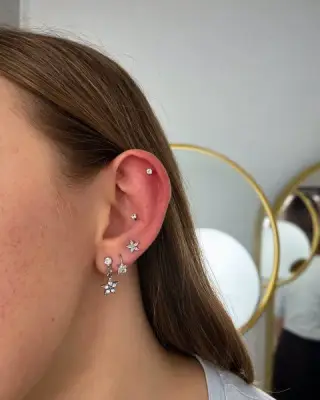
Ear piercing types – a quick guide
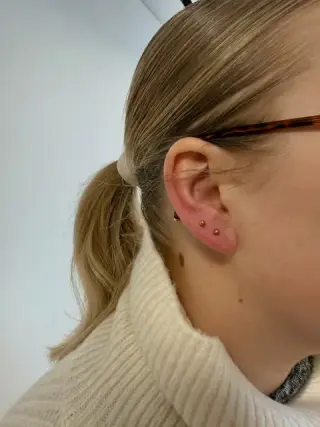
Lobe
The classic piercing in the soft lower part of the ear and a natural first choice.
Second and third lobe
Further piercings in the lobe above the first one. It’s still soft tissue, so healing is similar.
Helix
A piercing in the upper outer rim of the ear (cartilage). A forward helix sits at the front, where the ear meets the head.
Tragus and anti-tragus
The tragus is the small flap of cartilage in front of the ear canal. The anti-tragus sits opposite it, just above the lobe.
Conch
A piercing in the central, cup-shaped part of the ear – either inner or outer conch.
Rook, daith and snug
Piercings through the folds of cartilage inside the ear: the rook in the upper fold, the daith in the fold just above the ear canal, and the snug through the inner ridge. Whether they’re possible depends a lot on the shape of your ear.
Industrial
Two piercings in the upper cartilage joined by one long bar. It needs the right anatomy and a long healing time.
Not every ear suits every piercing – that comes down to your ear’s shape and the judgement of the person doing it.
Which one to start with
For a first piercing, the lobe is usually the way to go:
- it heals fastest,
- it’s the easiest to care for,
- it’s easy to find jewellery for later on.
A cartilage piercing is worth planning when you:
- have time for a longer healing period and regular care over several months,
- can avoid sleeping on that ear,
- aren’t planning on pools, saunas or contact sports where the ear could get knocked.
Not sure? Ask at your consultation – we’ll tell you what makes sense for your ear and your lifestyle.
Ear piercing at SHADY TATTOO
At SHADY TATTOO in Wieluń, ear piercing is done by Martyna, the studio manager, using the STUDEX System75 (ear piercing). According to the manufacturer, this system pierces the ear with a sterile stud from a factory-sealed pack, and the stud and back are put in place in one movement. Ask when booking which parts of the ear can be pierced at the studio and any other details. The piercing photos in our portfolio are Martyna’s work. Martyna also does nose and navel piercings. More on our piercing page.
How to prepare
- eat something and get a good night’s sleep,
- don’t drink alcohol before the piercing,
- mention any health conditions, allergies (e.g. to metals) and medication, especially anything affecting blood clotting,
- don’t come in with an infection, wound or irritated skin where you want the piercing,
- if you have long hair, bring a hair tie so it’s easy to keep it away from your ear.
Aftercare – the essentials
- wash your hands before touching your ear,
- don’t take the stud out while it heals,
- follow the instructions you get at the studio,
- avoid pools, saunas and open water while it heals,
- don’t sleep on a fresh piercing, especially in cartilage.
More detail: piercing aftercare.
When to see a doctor
Some redness, tenderness and slight swelling in the first few days are normal. See a doctor if pain, swelling or redness gets worse, if there’s pus, a fever or you feel unwell. With cartilage piercings, don’t wait – an untreated infection can permanently damage the cartilage. Don’t remove the jewellery unless a doctor tells you to.
Frequently asked questions
Which ear piercing is best to start with?
Usually the lobe – it heals fastest and is the easiest to care for.
Does a cartilage piercing hurt more than a lobe?
Everyone feels it differently, but cartilage is firmer and is usually felt more than the lobe.
How long does a cartilage piercing take to heal?
Usually several months or longer. STUDEX recommends at least 12 weeks of continuous wear, with full healing taking up to 12 months.
Can I get several piercings at once?
It depends on where and on your situation – ask at your consultation. Each fresh piercing needs care, and sleeping can get trickier if both ears are healing.
Who does ear piercing at SHADY TATTOO?
Martyna, the studio manager, using the STUDEX System75 (ear piercing). We’ll go over the details when you book.
Book an ear piercing
Ask Martyna about a date and which piercing would suit you best.
SHADY TATTOO, ul. Głęboka 15/3, 98-300 Wieluń, Poland · Mon–Fri 9:00–19:00, weekends by appointment (Ola and Zuzia)
Contact SHADY TATTOO → · Phone: +48 691 351 557 · Instagram: @tattoo.shady · Facebook: tattooshady
ONE LIFE. ONE SKIN. ONE RIGHT CHOICE.
Sources
General information in this article is based on the following sources (accessed 22 October 2026):